
Traveling With Kids: From Babies to Good Travelers

Who hasn’t been on a flight with a kid kicking the back of their seat, banging the tray table up and down, or standing on the seat to peer over and drool into your hair?
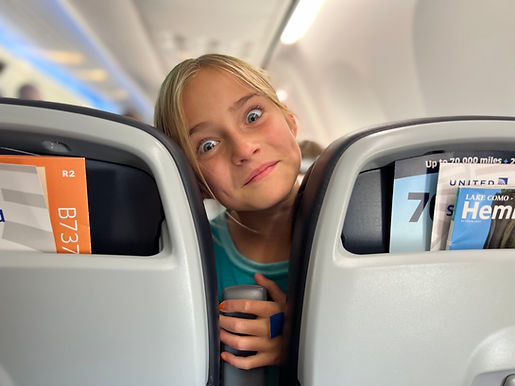
Don’t mistake me for a kid Scrooge. I love kids. But there is usually a common theme behind this kind of behavior: boredom.
I am still amazed by how often I see parents board a plane with young children and seemingly nothing for them to do. I have been known to carry crayons and a small pad of paper in my bag simply so I can dole them out when necessary. Screens have certainly helped, but even a kid who is perfectly happy watching cartoons will eventually get restless after four hours of staring at one. Traveling with kids is not about keeping them entertained every second, or making every moment magical, but about making the trip workable and giving them enough variety, participation and distraction that the magic has a chance to sneak in.
And do not underestimate how much children enjoy being included in adult life when it feels intentional. Going together to markets, train stations and museums lets them see you navigate the world as more than simply an entertainer for theirs. Let them help plan, choose one or two things they want to see in each city, pick something to compare at every bakery in town, learn a few phrases so they can order their own meal, or take the map and help figure out the walking route (especially fun in a place like Venice, where getting a little lost is half the point). The trips that stay with kids are often the ones where they felt part of something, where your kids begin to see you as the multifaceted human you, where your “family trip” becomes a shared story and some of the real bonding happens.
Markets are perfect for letting kids explore everyday life somewhere new. Give kids a camera and let them document the trip from their point of view. You may be surprised by Museums are not always dreary for kids
One of the great gifts of travel is that it gives kids a relatively safe place to practice independence while you are still standing right there.
Explore a market, let them take photos, or try a museum.
Surviving the Getting-There Part
Before worrying about entertainment, take care of the little physical things that can turn a long travel day into a miserable one. A few specifics truly make a difference, especially on flights:
For ears: For babies, a bottle during takeoff and landing can help with changing cabin pressure. One trick I used was to start with a little cold water or formula in the bottle and ask the flight attendant for a topper of warm water when it was time to feed. For older kids, sugar-free lollipops or gum encourage swallowing and can help with ears that won’t pop.
For comfort: Bring real headphones instead of earbuds. They stay put, are harder to lose between the seats, and kid-specific headphones can offer volume limiting. If you are traveling with a baby, a soft blanket or wrap tucked under your arm can make hours of holding them considerably more comfortable.
For sanity: Bring more wipes than you think you need... and then a few more. Accidents happen when the seatbelt light is on when you can least escape them.
For the inevitable: A small travel pharmacy can save enormous energy later: fever reducer, bandages and whatever other basics you normally use at home. If you are considering something like melatonin, check with your pediatrician first. It is much easier to pull something from your bag than hunt for a pharmacy in an unfamiliar place at bedtime.
For everyone: Always pack extra underwear in your carry-on, for the kids and for yourself. Unexpected layovers, lost luggage and spilled drinks are do not discriminate.

I still remember our first flight with a baby. Our son was two weeks old, and my husband and I were terrified we were going to be that couple, the new parents unable to calm their screaming baby while everyone around them wondered why on earth we had boarded an airplane.
So we decided to get ahead of it and printed about 20 little cards with a funny picture of our newborn and wrote a note on the back along the lines of, “My parents are new at this, so apologies in advance if I’m noisy.” We taped a pair of earplugs to each card and left them on each seat near us. It was a hit (and, as I recall, he was fine).
I am not suggesting you distribute earplugs every time you fly with a child, but there was something useful in the gesture. We knew we were sharing a small space with a lot of other people, we prepared as well as we could, kept our sense of humor, and then hoped for the best. Sometimes that is about all you can do.
Travel Activities for Kids: Don’t Pack More, Pace It Better
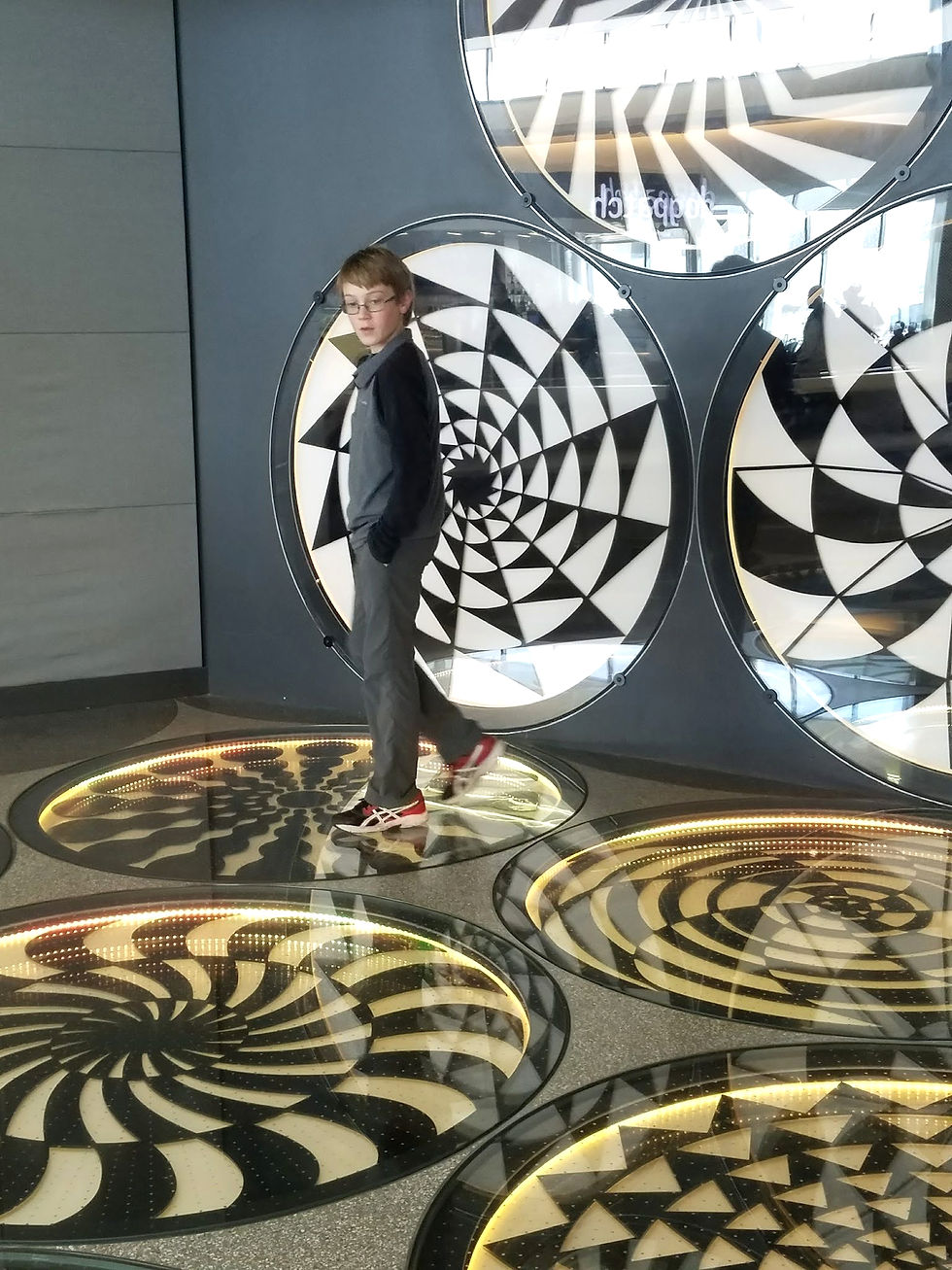
When it comes to fidgeting and boredom, the best remedy is changing up the rhythm and having something new to pull out when the last thing has run its course. You can start before you even board the plane.
Explore the airport! Airports can have wonderful art installations, observation areas, play and climbing spaces, airport trains to ride and, at the very least, long concourses where little legs can burn off some energy before being confined to a seat for several hours. Finding the gate, watching planes take off or even riding the moving walkway can be an activity when you are four. If you have time to spare, use it.
Once aboard, not everything needs to sparkle, light up or cost $30. A few ideas that have stood the test of time:
Things to make: new crayons or colored pencils, sketchpads, coloring or dry-erase books, Wikki Stix, origami, lacing or sewing cards.
Things to hunt for: search-and-find books, mazes, airport scavenger hunts, or a game of I Spy using the in-flight magazine.
Things to play: Pig in the Pen, Mad Libs, Go Fish, UNO, magnetic games and other small travel games without dozens of tiny pieces.
Things to build: magnetic tiles or a small LEGO kit, if you don’t dread the inevitable “piece drop.”
Things to read and listen to: actual books (!), audiobooks, podcasts and the interactive books with a reading pen that speaks when a child touches words or pictures.
Things on a screen: download a few new games, movies or shows before you leave home. Four hours of cartoons will eventually lose its appeal, but there is absolutely a time and place for a screen on a long flight.

New crayons, a notebook and something to figure out can go a surprisingly long way. 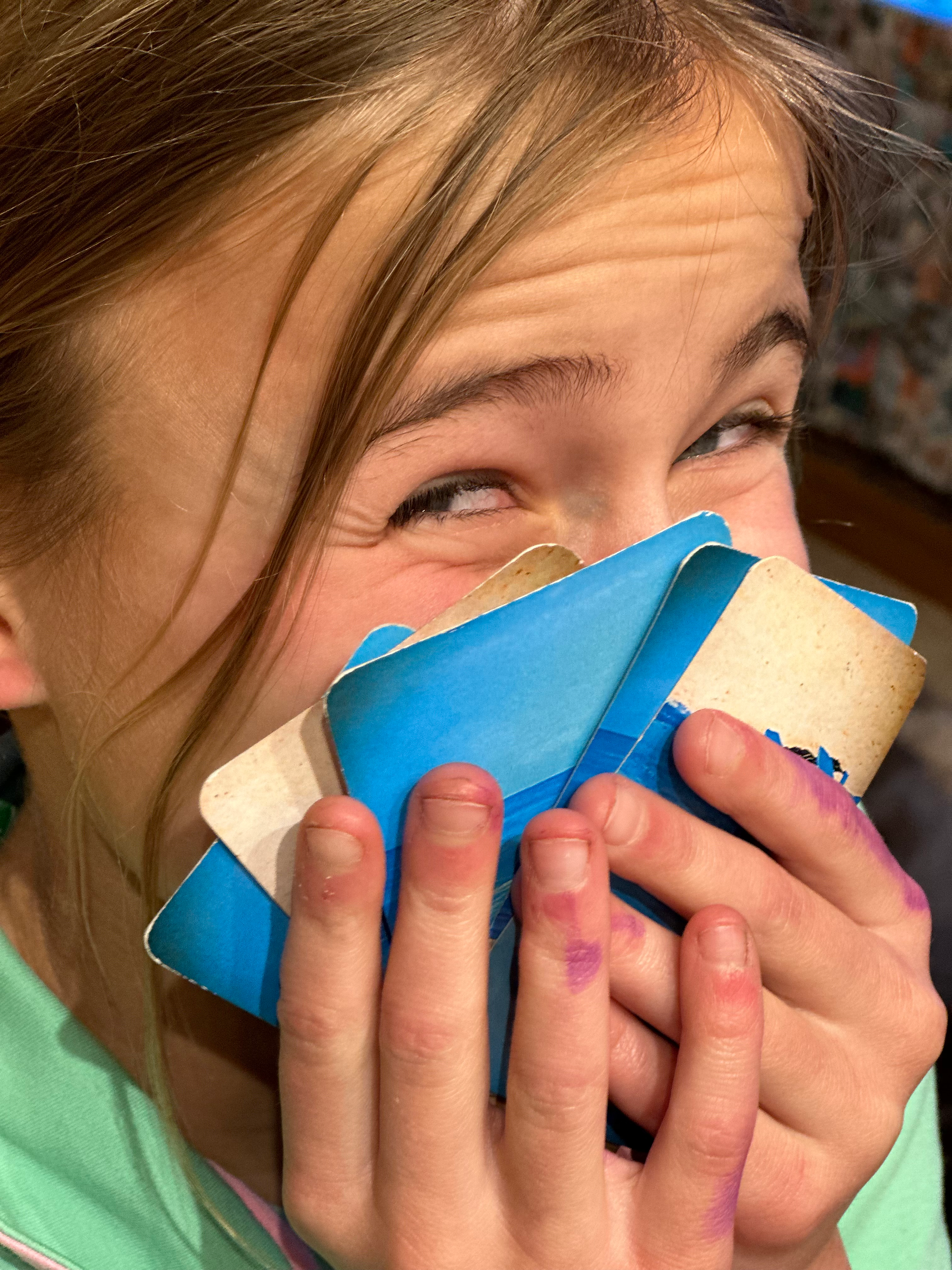
Play games!
New crayons, cards, a notebook and something to figure out can go a surprisingly long way.
Photos courtesy J. Holman
The trick is not really what you bring, though, it is how you dole it out. Do not hand over the whole activity bag at takeoff. Think of the trip in chapters: draw for a while, play Go Fish, watch something, have a snack, pull out something new, listen to an audiobook. Change things up before boredom turns into kicking the seat, and always keep one thing in reserve for the moment when everyone has had enough.
The trip itself can provide some of the entertainment, too. Let your kiddos find your gate on the departures board or follow the plane on the flight map. Give them your phone (or a camera if old enough) and ask for five interesting photographs from the day. Learn how to say “please” and “thank you” before you land, or give them $5 or €5 at the airport and let them choose something for the next part of the journey.
Our family saved a few treats that were activities for only when we traveled, and I think those little traditions matter. Maybe it is a new book for the flight, the same family card game, a playlist everyone adds to before leaving, or a little treat that is not allowed at home (this is one of those situations where you are allowed to embrace bribes and snacks).
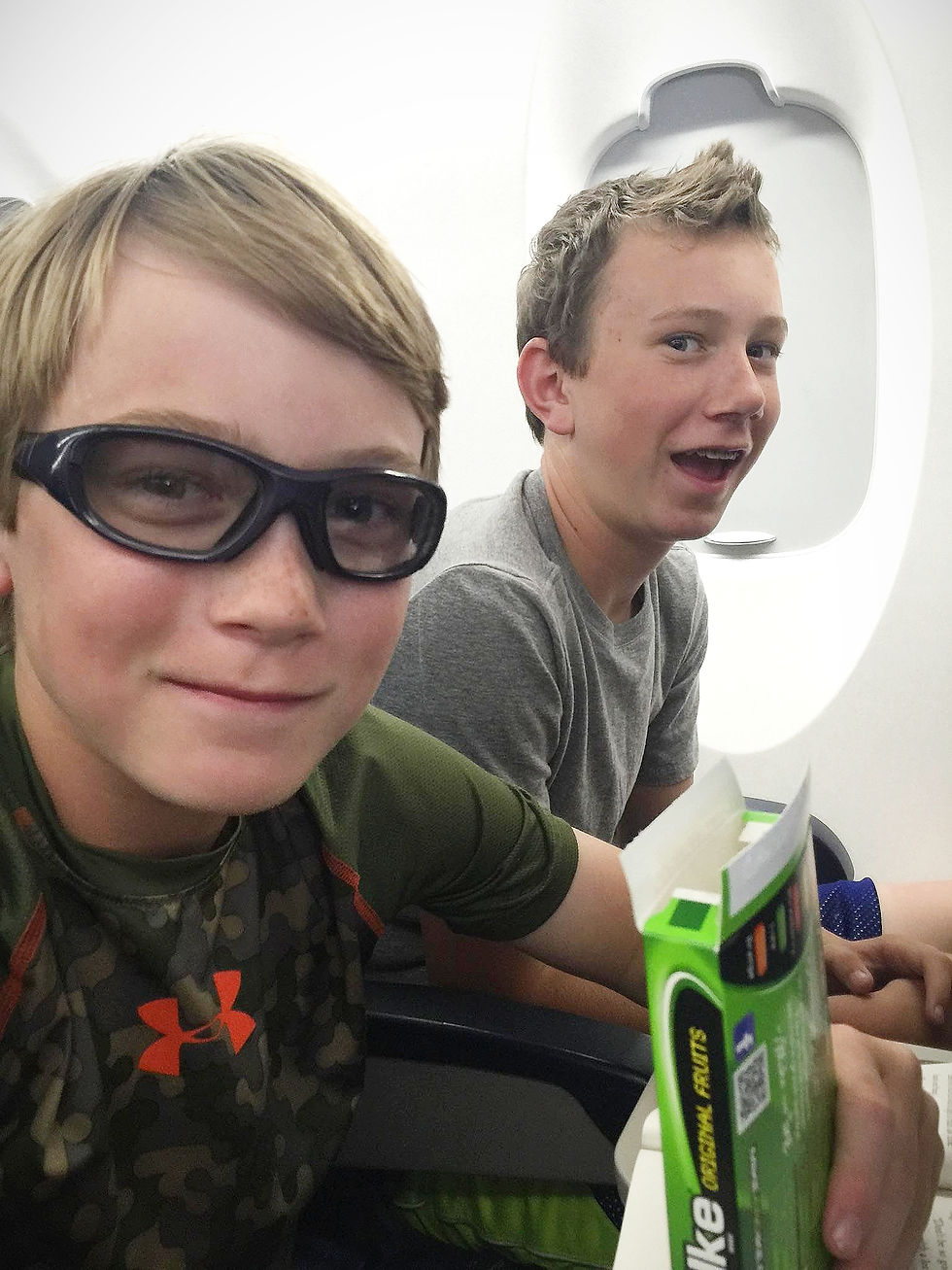
Never underestimate the power of snacks to reset a travel day. Bring plenty of familiar things you know your kids will eat, particularly because a delayed flight or closed airport restaurant can throw your carefully planned meal schedule right out the window. Keep those bellies full. Plus, travel day is probably not the moment to experiment with a lot of unfamiliar foods when you have a small stomach (and a very small airplane bathroom) to contend with. We had treats that appeared only on travel days (ours were Jelly Bellies), and that alone made flights something my kids got excited about. Those are the things kids start anticipating before a trip and, years later, may be the things they remember.
Teach Your Kids How to Be Travelers
There is another piece of traveling with kids that I think gets overlooked: teaching them how travel really works: finding the gate, watching the departure board, figuring out which train to take, handing over their own ticket, learning a few words of the local language, ordering their own croissant, following the little airplane across the map... these things may feel like logistics to us, but to a child they can feel like independence.
It is also a wonderful opportunity to teach them that we are sharing the world with other people. Feet do not go on the seat in front of us, and neither do knees. We let people get off the train before we pile on. We move to the side before stopping in the middle of a busy sidewalk, keep our voices down in hotel hallways, and say hello and thank you to flight attendants, drivers, hotel staff and servers. While travel does not have to become a running lesson in manners, with some direction, kids can learn that travel is not something solely for their entertainment. They will leanr that what they do affects other people and that they are a piece of the people-puzzle all around them.

As they get older, expand their role. They can navigate a Metro trip, hold onto the hotel key, figure out what something costs in dollars, find a restaurant on the map, or work out what time you need to leave the hotel to catch a train. Have them try the French or Italian themselves, even though you know perfectly well you could get the words out faster.
One of the great gifts of travel is that it gives kids a relatively safe place to practice independence while you are still standing right there. Over the years, you slowly go from taking your children places to teaching them how to move through the world on their own.
Do Not Forget the Adults
Now for the part parents sometimes forget to plan for: yourselves. Kids should not be the only ones enjoying the trip! Build in moments where you get to breathe too: perhaps a coffee while they are happily occupied, a walk after dinner while someone else handles bedtime, or simply a little time when you remember that you are also a person on this vacation.
If you are traveling with another family or extended family, trade time. You take the kids one afternoon and they take them the next. Everyone gets a break, and everyone gets a little time alone or with their partner. Or, better yet, hire a sitter for an evening.
The goal is not a perfectly behaved child, a perfectly planned day or a trip where no one ever melts down. You are traveling with children; things are going to go sideways. But give them things to do, let them participate in where you are going, change up the rhythm when boredom sets in, teach them a little about being part of the wider world, and leave some breathing room for yourselves. The trip becomes more enjoyable for everyone, including the person sitting in the seat in front of your child. And hopefully, they get to keep their hair dry.
About Jody Holman J ody Holman is a travel advisor, photographer and lifelong traveler who has explored more than 50 countries, often with kids in tow. Through Viewfinder Travel, she creates thoughtful, highly personalized trips with a particular love for France, Europe, Hawai‘i and Northern California. Her travel planning combines firsthand experience with an eye for art, food, history, photography and the small details that make a trip memorable.
Planning a trip? Learn more about working with Jody and Viewfinder Travel.
Photos copyright Holman Photography 2005 unless otherwise noted


Comments