
The Art of the Detour: Itinerary for Point Reyes, Tomales Bay & Taking the Long Way Home

Point Reyes Itinerary At a Glance

Time Needed: 1–3 days
Perfect For: Food lovers, Hikers, Photographers, Wine lovers, Couples
Highlights: Tomales Bay oysters, Point Reyes National Seashore, Fort Ross, Russian River, Cheese Trail, Point Reyes Station
The Point Reyes seashore and Tomales Bay coastal areas have a way of recalibrating expectations when what looks close on a map takes far longer than expected. But when the hills start rolling, the roads narrow, and the edges between farm, forest, and water blur you will not regret the detour.
This peninsula, shaped by tectonic forces and centuries of human use, sits directly along the San Andreas Fault—one side of Point Reyes slowly drifting north toward Alaska, the other remaining firmly attached to California. The land feels unsettled in the best possible way- discovered, but still wild.
Marshall store Menu of oysters and sandwiches near pt reyes
& tomales bay, Tomales Bay has been drawing fishermen,
oyster growers, and travelers for generations.

Marshall store Menu of oysters and sandwiches near pt reyes and tomales bay 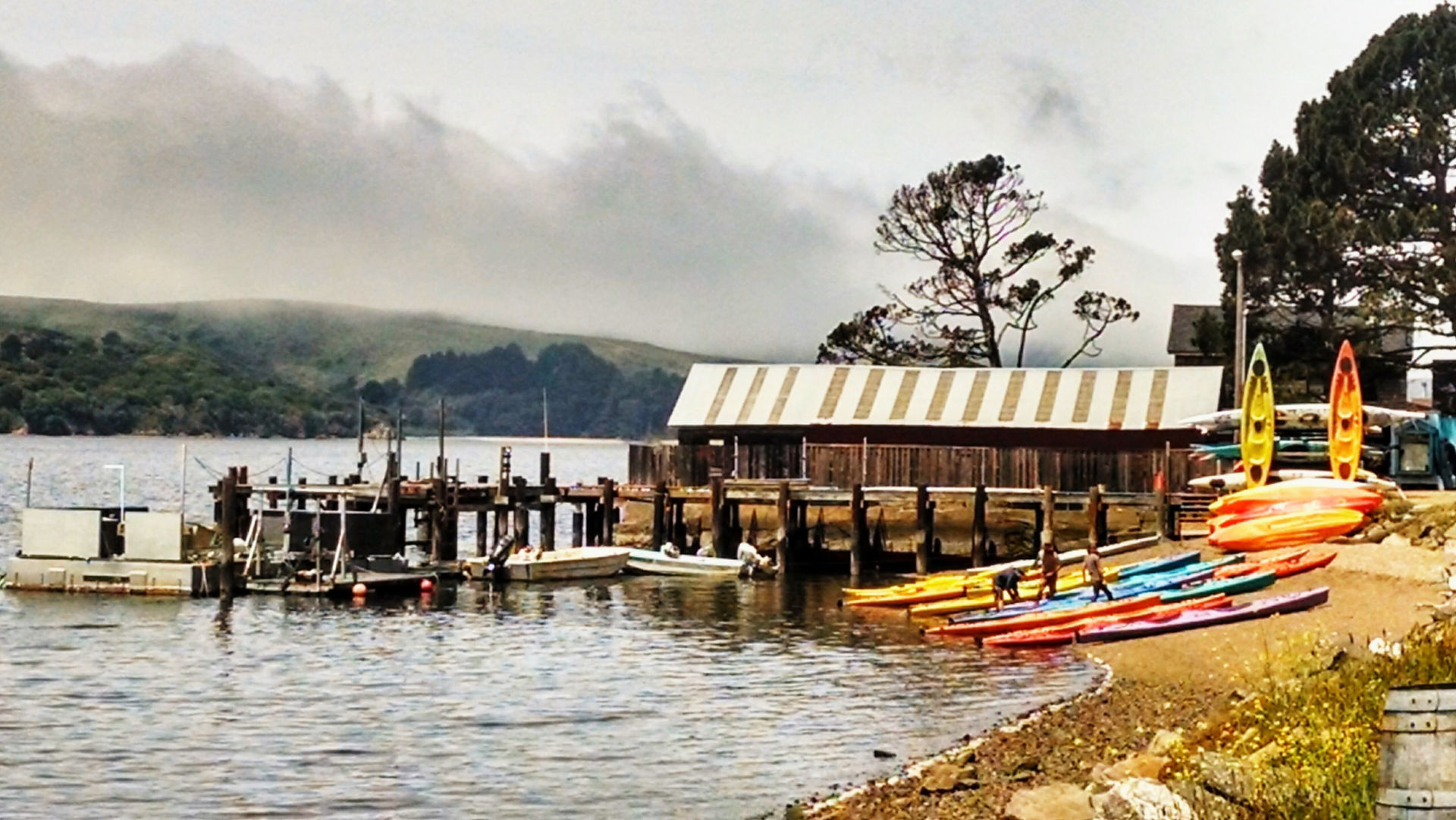
Tomales Bay has been drawing fishermen, oyster growers, and travelers for generations.
The Tomales Bay runs long and narrow, sheltered from the open ocean and perfectly suited for shellfish. Oysters have been cultivated here since the late 1800s, when Chinese laborers, barred from mining and many trades, turned to aquaculture along the California coast. That history is easy to miss—but it is worth remembering as you sit at a picnic table, hands cold from the breeze, looking out over the water, inhaling the scent of pine and sea salt.
Places like Tomales Bay Oyster Company. the Marshall Store, and Hog Island Oyster Co. keep the experience refreshingly unpolished. You line up, order by the dozen, and eat where you sit. No reservations—just brine, lemon, bread, and wine. Conversations stretch naturally here, helped along by the view and the absence of distraction.
Fresh Tomales Bay oysters are one of Northern California's simplest pleasures. Pier extending into Tomales Bay near Point Reyes.
Fresh Tomales Bay oysters are one of Northern California's simplest pleasures. Pier extending into Tomales Bay near Point Reyes.
Walking It Off

Beyond the tables and shuckers, Point Reyes National Seashore offers some of the most quietly expansive hiking in Northern California. Once you move past the most popular overlooks, the trails open into headlands, grasslands, and stretches where the only sound is wind through coastal scrub.
Walks out toward Tomales Point, especially in late winter or early spring, feel elemental. You might be lucky to catch th Tule elk moving across the hills while fog drifts in and out, and the scale of the landscape makes conversation optional. {Pack layers.}
A Landscape Shaped by Use
Point Reyes is not untouched wilderness; ranches still operate within the park’s boundaries, a reminder that this land has long been worked. The mix of dairy farms, coastal trails, and historic buildings gives the area a lived-in quality that distinguishes it from more manicured destinations. Stop at a smaller farm stand or roadside pullout to discover something local- perhaps a cheese or a small-batch jam. Embrace the unplanned.

Point Reyes Station
Point Reyes Station is not trying to impress, which is precisely its draw. You might find a hardware store, a bakery, a bookstore, and a few places to eat well without ceremony. If you need coffee, pastries, or a newspaper, this is the place. It is also a good reset before heading farther north.
Fort Ross
North of Point Reyes, the coast grows steeper and more exposed. Fort Ross State Historic Park sits on a bluff above the Pacific, its wooden walls facing the weather and the water. The views extend far south and west. Founded in 1812 by the Russian-American Company, Fort Ross was the southernmost Russian settlement in North America—an agricultural and fur-trading outpost designed to support Russian colonies farther north in Alaska. Walking just the perimeter is enough to understand why this place mattered, but the beautiful chapel and stockades are worth a visit.
Gun room at Fort Ross brings its history to life Historic buildings, chapel, cannons, and exhibits at Fort Ross State Historic Park. Fort Ross tells one of California's lesser-known stories. Fort Ross preserves California's Russian colonial history overlooking the Pacific.
Historic buildings, chapel, cannons, and exhibits at Fort Ross State Historic Park.
Sea otters once drew traders here and nearly vanished because of it. Today, small families raft again in the kelp below the cliffs, their presence a quiet correction written into the water. The Russians sold the fort in 1841 and left California behind.
Turning Inland: Cheese, Small Towns & Agricultural California
Leaving Point Reyes and following the coast slightly north, the landscape holds onto the wind and salt just a bit longer. Headlands soften, the road narrows, and then—almost without ceremony—you reach Bodega Bay.

Fishing boats, water, and weather dominate the mood. Even if you don’t linger, the harbor and surrounding bluffs remind you that this coast still earns its living. The light here—especially late afternoon—can be unexpectedly beautiful in a spare, utilitarian way.
Just inland sits St. Teresa of Avila Church, best known for its appearance in Hitchcock’s The Birds. Even without the cinematic reference, it’s worth the short detour. The church is modest and white, set against open land that makes it feel shyly exposed. Its ordinariness is part of its allure.

Farther east, the Petrified Forest offers a different sense of time entirely. The walk through fossilized redwoods is gentle and humbling. It is not dramatic in the way coastal cliffs are, but it is remarkable, and stays with you.
From here, turning east, the landscape changes quickly as wind gives way to pasture, salt air fades into hay, eucalyptus, and manure—in the most comforting sense. This is dairy country, long before it was destination country.
Occidental is small and self-contained, the kind of town you pass through slowly without meaning to. Once a railroad stop, it retains a slightly anachronistic calm: wooden storefronts, shaded sidewalks. It is a good place to stop for lunch without an agenda, to let the day stretch a little.
The Cheese Trail
Marin’s dairy history predates wine by generations. Swiss and Italian immigrants settled here in the mid-1800s, drawn by grasslands and a forgiving climate. You do not need to hit every stop; one or two is plenty.
Marin's dairy heritage deserves a stop of its own. Local cheeses, good bread, and time to linger.
Marin's dairy heritage deserves a stop of its own. Local cheeses, good bread, and time to linger.
Point Reyes Farmstead Cheese Company — A working creamery with a relaxed patio, distinctive cheeses, and a thoughtful menu for accompaniments.
Cowgirl Creamery (Point Reyes Station) — Ideal for picnic supplies: Mt. Tam, Red Hawk, crusty bread, maybe a jar of honey. If timed well, this is lunch.
Continuing east, Petaluma often surprises travelers who bypass it. Once a major poultry hub, the town still wears its working past in brick warehouses and a proper riverfront downtown. Today, is one of the better food stops in the North Bay.
A slow lunch at Central Market highlights Sonoma’s seasonal abundance. For dinner, Table Culture Provisions offers an intimate, thoughtful meal, while The Shuckery’s oysters or a pizza at Wild Goat Bistro capture the town’s easy conviviality.
An Alternate Way Home: The Russian River
If pasture begins to blur together, head north before turning east and let the road pull you into the trees. The Russian River route trades openness for shade.

Guerneville remains idiosyncratic and welcoming. The river slows everything down—meals, conversations, afternoons. This route pairs beautifully with:
A night at The Stavrand (read more about this hotel here)
A walk along the riverbanks
A casual dinner in town before continuing on
(If you take this route, it’s best kept to daylight hours—the drive is winding, wooded, and worth seeing.)
From here, it is an easy return toward San Francisco, carrying with you the quieter rhythms of agricultural California—unshowy, enduring, and deeply tied to the land.
When to Go, and How to Do It
Point Reyes works well as a day trip, but it shines brightest when paired with an overnight nearby—allowing you to linger over lunch, walk without watching the clock, and drive back only when the light begins to shift. The fog will add to the romance.
Who Might Like this Area
This coastal stretch suits travelers who enjoy easy food, prefer walking to itineraries, accept weather as part of the experience, and value landscapes that haven’t been overexplored. It rewards those willing to follow the road as it bends.
For travelers who want a more structured way to experience this route over two or three nights, I have outlined a romantic North Coast itinerary here.
Planning the Route Thoughtfully
The best Point Reyes itinerary includes days that are shaped by impulse: a long lunch, a good walk, a stretch of road taken slowly. Knowing where to stop—and where to simply pass through—makes all the difference.
If you’d like help planning a Northern California escape that includes Point Reyes, Tomales Bay, or a longer coastal route designed around food, walking, and place, I’d be happy to help.
Planning a Northern California road trip?
If you are dreaming about Northern California, France, Hawaiʻi, or somewhere entirely new, I'd love to help you create a journey that reflects the way you like to travel.
Every itinerary is designed with the hope that somewhere along the way, you'll stumble upon a place you'll still be talking about years from now.
About the Author - Jody Holman is the founder of Viewfinder Travel, where she designs customized journeys for curious travelers who value authentic experiences over crowded itineraries. Drawing on her background in photography, languages, and wine education, she helps clients discover the restaurants, villages, landscapes, and local traditions that often become the most memorable parts of a trip. She specializes in France, Northern California, Hawaiʻi, and Europe.


Comments